
Industrial Gas Pressure Regulators

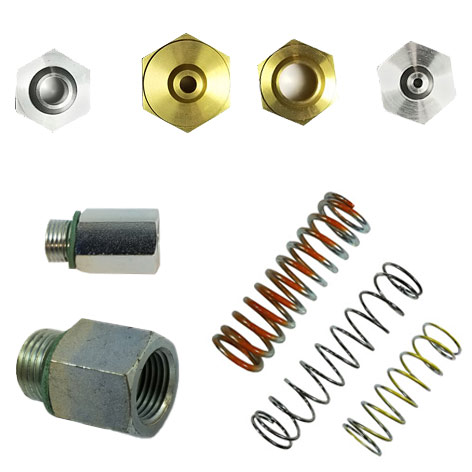
Gas pressure regulators protect the fuel train of a combustion system by reducing an unregulated upstream gas supply to the steady, lower pressure a burner needs to fire safely and consistently. Working through a spring loaded diaphragm, a regulator senses downstream demand and adjusts valve position in real time, holding manifold pressure within a tight range even as flow rates shift. Without accurate regulation, burners, boilers, and furnaces are exposed to pressure swings that cause flame instability, nuisance shutdowns, and premature wear on downstream components.
Selecting the correct gas pressure regulator depends on inlet pressure, required outlet setpoint, and the full firing rate of the connected burner, with margin built in for peak demand. Properly matched regulators reduce nuisance lockouts, support compliance with combustion safety standards, and extend the service life of ignition and flame safety components downstream. These regulators are suitable for new burner installations, gas train upgrades, and like for like replacement on existing equipment.
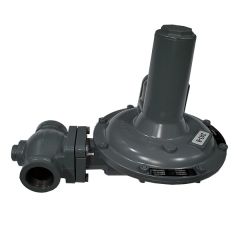
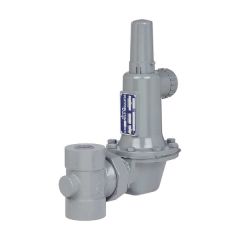
Shop Relevant supplies gas regulators for natural gas, propane, and other industrial fuel gases, including line pressure regulators positioned upstream in the gas train and appliance regulators mounted directly at the burner to set final manifold pressure. The catalog includes Maxitrol and Pietro Fiorentini regulators sized for burners, boilers, ovens, and process heating equipment, along with monitor and relief configurations for applications where overpressure protection is required. Ships same day.
Frequently Asked Questions
What does a gas pressure regulator do in a combustion system?
It reduces and stabilizes gas pressure from the supply line to the constant, lower pressure a burner's manifold requires, adjusting automatically as downstream demand changes to keep the flame steady.
What is the difference between a line regulator and an appliance regulator?
A line regulator sits upstream in the gas train and performs the first stage of pressure reduction, while an appliance regulator mounts at the burner itself and sets the final, precise manifold pressure the burner needs to fire correctly.
How do I size a gas regulator for my burner?
Sizing depends on the regulator's rated capacity at your available inlet pressure, matched to the burner's full firing rate plus a margin, typically twenty five percent, to account for peak demand without excessive pressure drop.
What happens if a gas regulator is undersized or fails?
An undersized or failing regulator can cause pressure droop under load, unstable flame, and nuisance safety shutdowns, or in more serious cases dangerous overpressure to the burner, which is why monitor and relief configurations are used in higher risk applications.
-

-

-
-
-
-
-
-
-
-
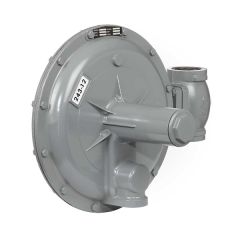
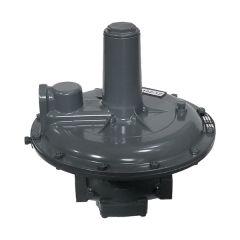
USG 243-12-2 2" NPT Gas Pressure Regulator 3/4" OrificePart Number: 243-12-2.N88GN12-30105
SKU: 346437
-
-
-
-
-
-
-
-
-
-